Epic · Vaishnava
About this Book
The second book of Valmiki Ramayana, narrating the exile of Lord Rama, Dasaratha's grief, and Bharata's devotion.
The Ayodhya Kanda, or "Book of Ayodhya," is the second and longest kanda of the Ramayana in terms of emotional depth. At 119 sargas and 4,004 verses, it is the heart of the epic's moral universe — a profound exploration of duty, sacrifice, and the weight of a king's word.
The story opens in celebration: Dasaratha, aged and weary, decides to crown Rama as the heir apparent (Yuvaraja). All of Ayodhya rejoices. But on the eve of the coronation, the hunchbacked maid Manthara poisons the mind of Queen Kaikeyi against Rama. Kaikeyi, recalling two boons that Dasaratha had once promised her, demands: that her son Bharata be crowned king instead of Rama, and that Rama be exiled to the Dandaka forest for fourteen years.
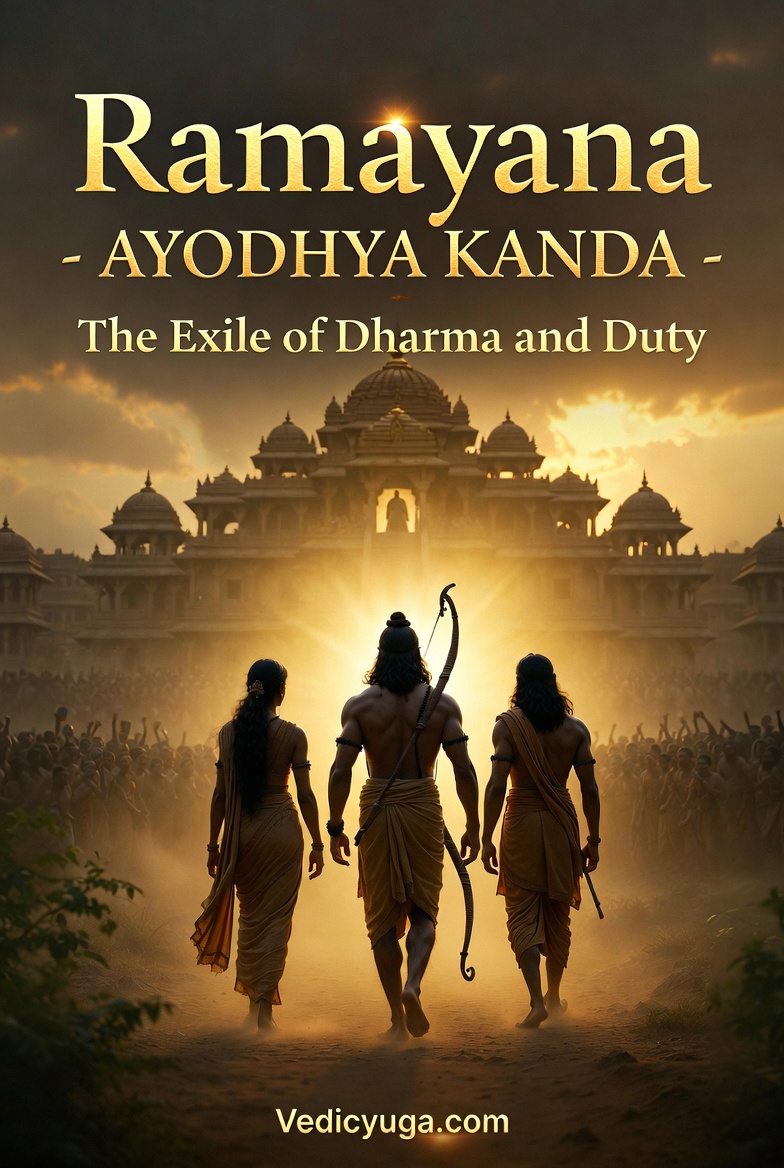
Bound by his word (a king's dharma above all else), Dasaratha is utterly broken — but he cannot refuse. Rama, with complete equanimity, accepts the exile without bitterness or protest. His young wife Sita insists on accompanying him, and the devoted Lakshmana refuses to be left behind. The three depart barefoot into the forest while all of Ayodhya weeps.
Dasaratha, unable to survive the separation from Rama, dies of grief. Bharata, who was absent during these events and returns to find his mother's treachery, is devastated. He refuses the throne entirely, travels to the forest to beg Rama to return, and when Rama declines (unwilling to violate his father's word), Bharata rules as a regent only — placing Rama's sandals on the throne as a symbol of the rightful king. The Ayodhya Kanda is a masterpiece of ethical complexity, asking: what does it mean to do the right thing when every choice brings heartbreak?
Chapters