Epic · Vaishnava
About this Book
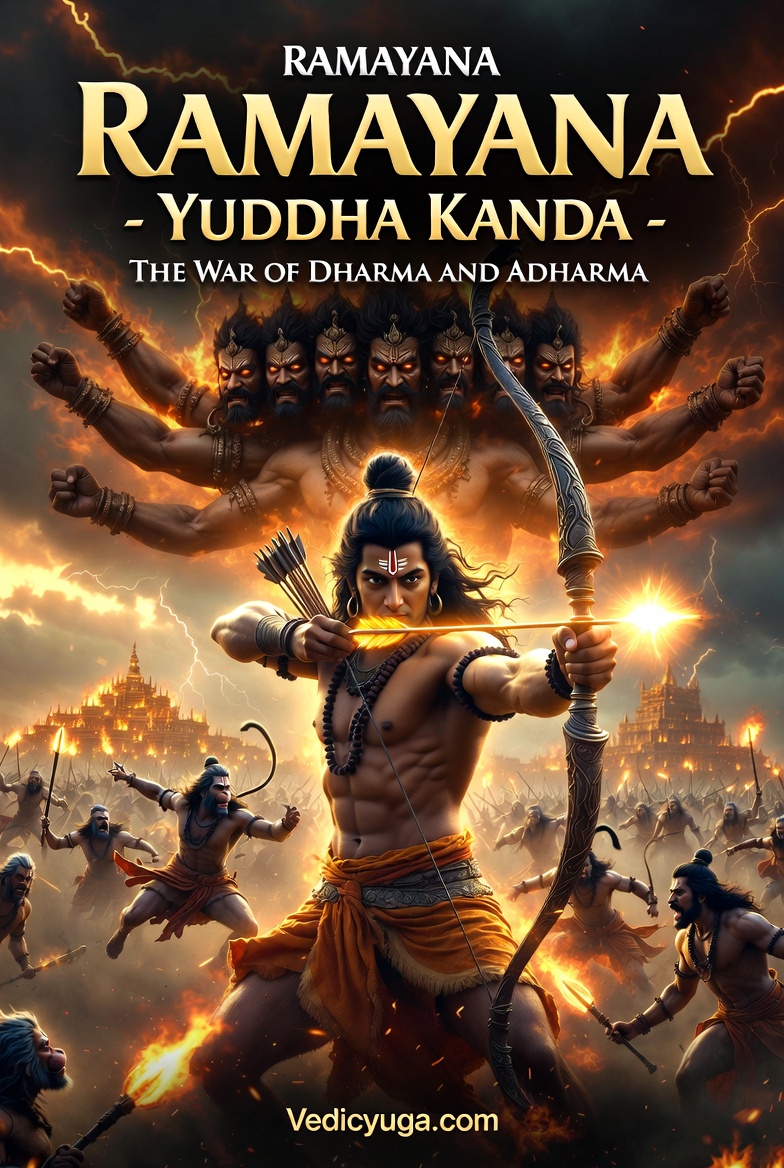
The sixth book of Valmiki Ramayana — the War Book. Narrates the epic battle between Rama and Ravana, the liberation of Sita, and Rama's triumphant return to Ayodhya.
The Yuddha Kanda, or "War Book," is the sixth and climactic kanda of Valmiki's Ramayana — 128 sargas and 5,232 verses that describe the greatest battle in ancient Indian literature. It is the fulfillment of every promise and every sacrifice that came before: Rama's fourteen-year exile, Sita's abduction, and Hanuman's extraordinary crossing all find their resolution here.
The Yuddha Kanda opens with the monumental engineering feat of building a bridge (Rama Setu) across the ocean to Lanka — an army of Vanaras and bears moving mountains and hurling boulders into the sea, guided by the divine architect Nala. The bridge-building sequences are full of wonder and collective heroism, as countless beings contribute to a single sacred cause.
The battle itself unfolds over many days in a series of single combats and mass engagements that read like Homer's Iliad transposed to the tropical south. Great warriors fall on both sides: Kumbhakarna (Ravana's giant brother), Indrajit (his brilliant son, conqueror of Indra himself, who uses invisible warfare and the deadly Brahmastra), and countless demon champions. Rama's allies are struck down and revived; Lakshmana nearly dies from the Shakti weapon and is saved only when Hanuman flies to the Himalayas and returns with the life-giving Sanjeevani herb in a legendary all-night journey.
The epic culminates in the final duel between Rama and Ravana — a duel of divine weapons and immense forces, lasting through a full cosmic sequence of Ravana's heads being severed and growing back, until the sage Agastya appears to teach Rama the Aditya Hridayam prayer, and Rama slays Ravana with the Brahmastra. Sita's Agni Pariksha (trial by fire), the reunion of Rama and Sita, the return to Ayodhya on the Pushpaka Vimana (flying chariot), and Rama's coronation as king — the Yuddha Kanda brings the Ramayana to its great and luminous conclusion.
Chapters